

Alpha Impex India is a global trading and export company specializing in sustainable construction materials and agro & food products. Rooted in India with global reach, we deliver quality-driven, ethically sourced products through reliable trade ...
- (+91) 9840047860
- info@alpha-impex.com
- 34, 36, Devadi Street, Kutchery Road, OPP More Supermarket, Mylapore, , Chennai, Tamil Nadu, India. 600004
© 2020 Alpha Impex India. All Rights Reserved
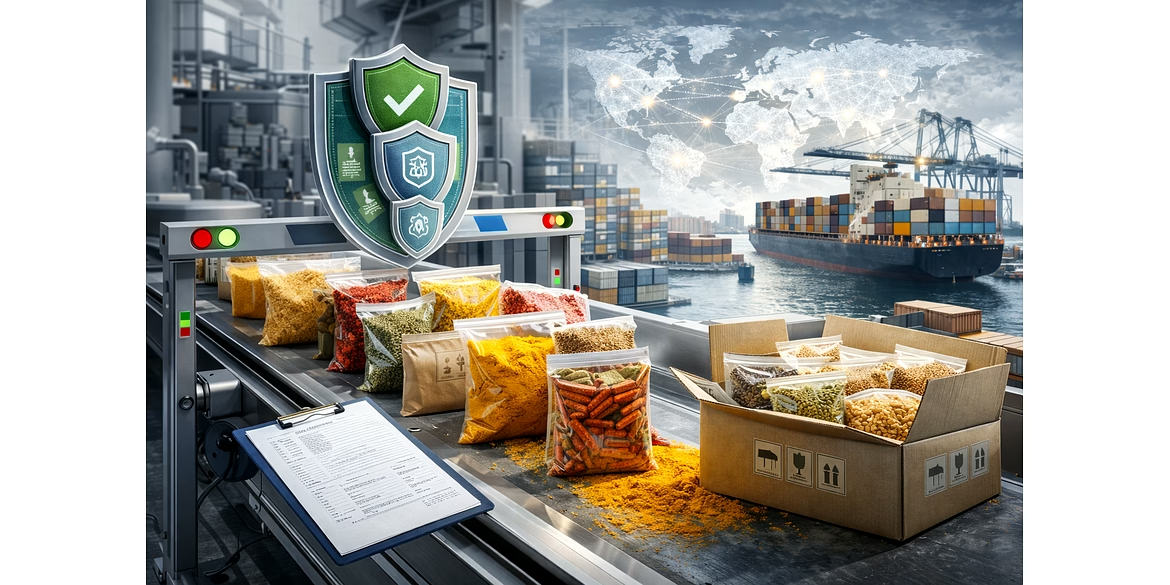

Quality standards play a critical role in international food trade, especially for global buyers sourcing from multiple origins. Consistent quality ensures food safety, regulatory compliance, brand protection, and uninterrupted market access.
For Indian food exports, meeting global quality expectations is essential to maintaining trust and long-term buyer relationships.
Quality standards play a critical role in international food trade, especially for global buyers sourcing from multiple origins. Consistent quality ensures food safety, regulatory compliance, brand protection, and uninterrupted market access.
Why Quality Standards Matter- Protect consumer health and safety
- Ensure compliance with import regulations
- Reduce shipment rejection and recall risks
Global buyers expect uniform quality across every shipment. This includes consistency in color, flavor, texture, moisture content, and overall appearance. Variations can lead to production inefficiencies and brand inconsistencies for buyers.
Indian exporters serving international markets focus on standardized specifications to ensure repeatability.
Specification Expectations- Consistent grading and sizing
- Uniform flavor and aroma profiles
- Controlled moisture and purity levels
Food safety is a non-negotiable requirement for global buyers. Indian food exporters are expected to follow strict hygiene practices throughout sourcing, processing, packaging, and storage to meet international food safety norms.
Proper hygiene minimizes contamination risks and ensures product integrity.
Food Safety Requirements- Clean and controlled processing environments
- Preventive contamination control measures
- Safe handling and storage practices
Traceability allows global buyers to track products from origin to final delivery. Buyers increasingly demand transparent supply chains to ensure accountability, food safety, and regulatory compliance.
Indian exporters are expected to maintain clear sourcing and batch-level documentation.
Traceability Expectations- Source-level documentation
- Batch and lot tracking systems
- Transparent records across the supply chain
Each importing country has specific regulatory requirements for food products. Global buyers expect Indian exporters to understand and comply with these regulations, including labeling, documentation, and customs requirements.
Accurate documentation ensures smooth customs clearance and reduces delays.
Compliance Essentials- Accurate export and shipping documentation
- Alignment with destination-country regulations
- Proper labeling and product declarations
Packaging plays a vital role in preserving food quality during international transit. Buyers expect packaging that protects against moisture, contamination, and physical damage while complying with food safety regulations.
Exporters must offer packaging solutions tailored to product type and buyer requirements.
Packaging Expectations- Food-grade and contamination-resistant materials
- Secure packaging for long-distance transport
- Flexible packaging options for bulk and retail use
Global buyers rely on predictable shelf life to manage inventory and distribution. Indian food exporters are expected to supply products with stable shelf life supported by proper processing and packaging methods.
Shelf life consistency ensures product performance throughout the supply chain.
Shelf Life Considerations- Clear shelf life declarations
- Stable storage characteristics
- Protection against environmental exposure
Beyond one-time compliance, global buyers value exporters who deliver consistent quality across multiple shipments and long-term contracts. Reliability reduces operational risk and strengthens sourcing partnerships.
Indian exporters with structured quality systems are better positioned for long-term collaboration.
Consistency Benefits- Reduced inspection and rejection risks
- Improved buyer confidence
- Stronger long-term sourcing relationships
1. What quality standards do global buyers expect from Indian food exporters?
Global buyers expect consistent specifications, food safety compliance, traceability, proper documentation, and reliable shelf life.
2. Why is consistency important in food exports?
Consistency ensures predictable product performance, reduces operational risk, and protects buyer brand reputation.
3. How does traceability benefit global buyers?
Traceability allows buyers to verify product origin, manage food safety risks, and meet regulatory requirements.
4. What role does packaging play in food export quality?
Packaging protects products during transit, preserves freshness, and ensures compliance with food safety standards.
5. How do quality standards reduce shipment rejection risks?
Standardized processes, documentation, and quality checks minimize non-compliance and quality deviations.
6. Are Indian food exports suitable for long-term sourcing contracts?
Yes, exporters with structured quality and compliance systems can support recurring orders and long-term partnerships.
7. How can buyers verify an exporter’s quality standards?
Buyers can review documentation, quality records, traceability systems, and past performance across shipments.