

Alpha Impex India is a global trading and export company specializing in sustainable construction materials and agro & food products. Rooted in India with global reach, we deliver quality-driven, ethically sourced products through reliable trade ...
- (+91) 9840047860
- info@alpha-impex.com
- 34, 36, Devadi Street, Kutchery Road, OPP More Supermarket, Mylapore, , Chennai, Tamil Nadu, India. 600004
© 2020 Alpha Impex India. All Rights Reserved
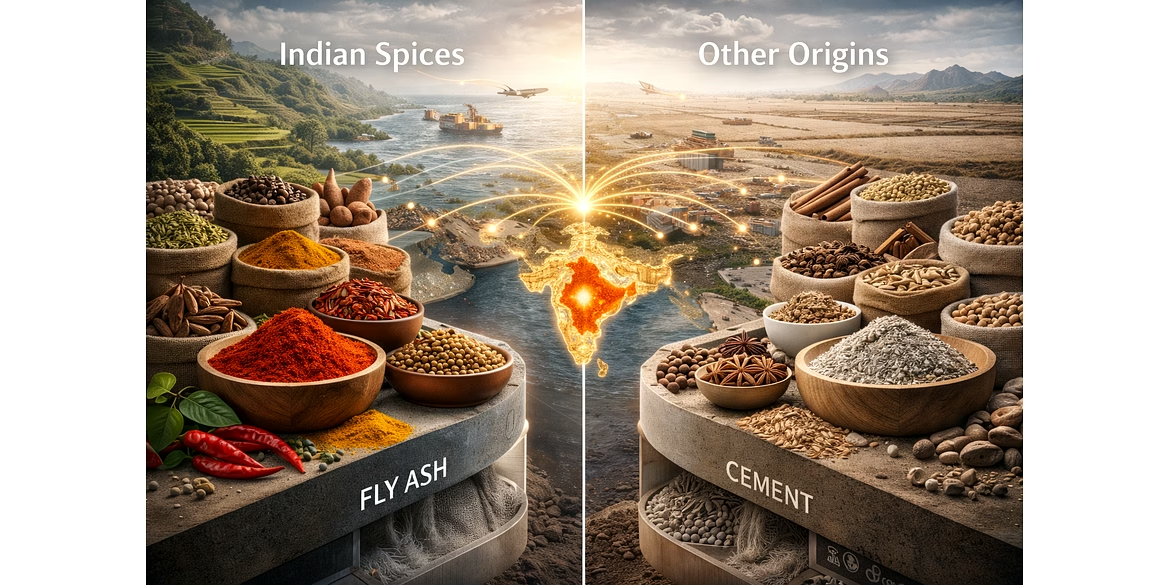

For global spice buyers, comparing spice origins is essential for sourcing decisions that protect flavor consistency, product quality, pricing stability, and long-term supply reliability. In international spice sourcing, Indian spices are frequently benchmarked against other origins such as Vietnam, Indonesia, China, Africa, and Latin America because of India’s scale, diversity, and export maturity.
For importers and food manufacturers, the origin of spices directly affects product quality, flavor consistency, pricing stability, and long-term supply reliability. Different producing countries offer distinct advantages, but not all origins perform equally across commercial, operational, and regulatory expectations.
Indian spices are often benchmarked against origins such as Vietnam, Indonesia, China, Africa, and Latin America due to India’s scale, diversity, and export maturity. For buyers building dependable procurement programs, comparing Indian spices vs other origins helps strengthen supplier selection and reduce sourcing risk in global food supply chains.
Key Buyer Considerations- Flavor strength and consistency
- Quality and processing standards
- Cost competitiveness and supply stability
Indian spices are known for consistent quality driven by region-specific cultivation, standardized processing, and export-oriented quality controls. Many other origins offer good quality but may face limitations in uniformity, grading consistency, or export scalability.
For global buyers, quality predictability is critical for production planning. Buyers sourcing spices for food manufacturing and retail often prioritize predictable grading, moisture control, and repeatable specifications—factors that can make Indian spice sourcing a practical baseline for long-term procurement.
Quality Comparison Highlights- India: standardized grading, export-ready processing
- Other origins: variable quality depending on region and supplier
- India offers stronger consistency for bulk and recurring orders
Flavor intensity and aroma are major reasons why Indian spices are preferred globally. India’s diverse agro-climatic zones produce spices with higher essential oil content and more complex flavor profiles.
Other origins may offer milder or more uniform flavors, which can be suitable for certain applications but less desirable for premium or authentic formulations. For brands optimizing authentic taste and consistent sensory performance, Indian spices often support both traditional and global cuisines.
Flavor Profile Comparison- Indian spices: bold aroma, rich flavor, strong pungency
- Other origins: milder flavor, less variation
- Indian spices suit both traditional and global cuisines
India offers one of the widest spice portfolios in the world, allowing buyers to source multiple products from a single origin. This simplifies procurement, logistics, and supplier management.
Other origins may specialize in a limited number of spices, requiring buyers to source from multiple countries. For importers aiming to streamline global sourcing and reduce complexity, consolidated sourcing from India can support broader category coverage with fewer supplier touchpoints.
Range Comparison- India: whole, ground, organic, and specialty varieties
- Other origins: limited spice categories
- India supports consolidated sourcing strategies
Indian spices offer a strong balance between quality and pricing. Large-scale cultivation, established farmer networks, and efficient processing infrastructure help keep costs competitive without compromising standards.
Some origins may offer lower prices for specific spices, but often with trade-offs in consistency, compliance, or supply reliability. For buyers focused on stable procurement programs, value-based spice sourcing from India can support long-term contracts and predictable specifications.
Pricing Comparison- India: competitive pricing with stable quality
- Other origins: price fluctuations and supply variability
- India offers better value for long-term contracts
Supply continuity is essential for importers and manufacturers. India’s large production base and diversified growing regions reduce dependency on a single harvest or area.
Other origins may face higher risk from climate dependency or limited production capacity. For bulk and recurring orders, scalable supply is a key reason many buyers anchor a portion of their spice sourcing in India to support year-round availability.
Supply Comparison- India: scalable supply and year-round availability
- Other origins: limited volumes or seasonal constraints
- India supports bulk and recurring orders reliably
Global buyers increasingly prioritize compliance and traceability. Indian exporters serving international markets maintain documentation, batch traceability, and regulatory alignment to meet destination-country requirements.
Other origins may vary in documentation standards and export readiness. For regulated markets, strong export documentation and traceability can reduce regulatory and clearance risks while improving sourcing confidence.
Compliance Comparison- India: strong export documentation and traceability
- Other origins: inconsistent compliance frameworks
- India reduces regulatory and clearance risks
While different origins serve different market needs, Indian spices offer a comprehensive solution for buyers seeking consistency, variety, scalability, and long-term value. Many global buyers adopt Indian spices as a core sourcing origin while supplementing with niche suppliers from other regions.
The right choice depends on application, volume, and quality expectations. A structured spice origin comparison can help buyers optimize cost competitiveness while protecting quality consistency and long-term supply reliability.
Decision Factors- Intended application and flavor profile
- Volume and frequency of orders
- Compliance and supply risk tolerance
They offer stronger flavor, consistent quality, wide variety, and reliable supply for global markets.
2. Are Indian spices more expensive than other origins?Not necessarily. Indian spices provide competitive pricing with better quality consistency and scalability, offering stronger long-term value.
3. Do Indian spices have stronger flavor than other origins?Yes, many Indian spices have higher essential oil content, resulting in richer aroma and flavor intensity.
4. Can global buyers source multiple spices from India?Yes, India offers one of the widest spice portfolios, enabling consolidated sourcing from a single origin.
5. How does India compare in terms of supply stability?India’s diversified production regions and large output ensure better supply continuity than many other origins.
6. Are Indian spices compliant with international regulations?Reputable Indian exporters maintain documentation, traceability, and compliance aligned with global import requirements.
7. When should buyers consider sourcing from other origins?Other origins may be suitable for niche products, specific flavor profiles, or regional specialties, depending on buyer needs.