

Alpha Impex India is a global trading and export company specializing in sustainable construction materials and agro & food products. Rooted in India with global reach, we deliver quality-driven, ethically sourced products through reliable trade ...
- (+91) 9840047860
- info@alpha-impex.com
- 34, 36, Devadi Street, Kutchery Road, OPP More Supermarket, Mylapore, , Chennai, Tamil Nadu, India. 600004
© 2020 Alpha Impex India. All Rights Reserved
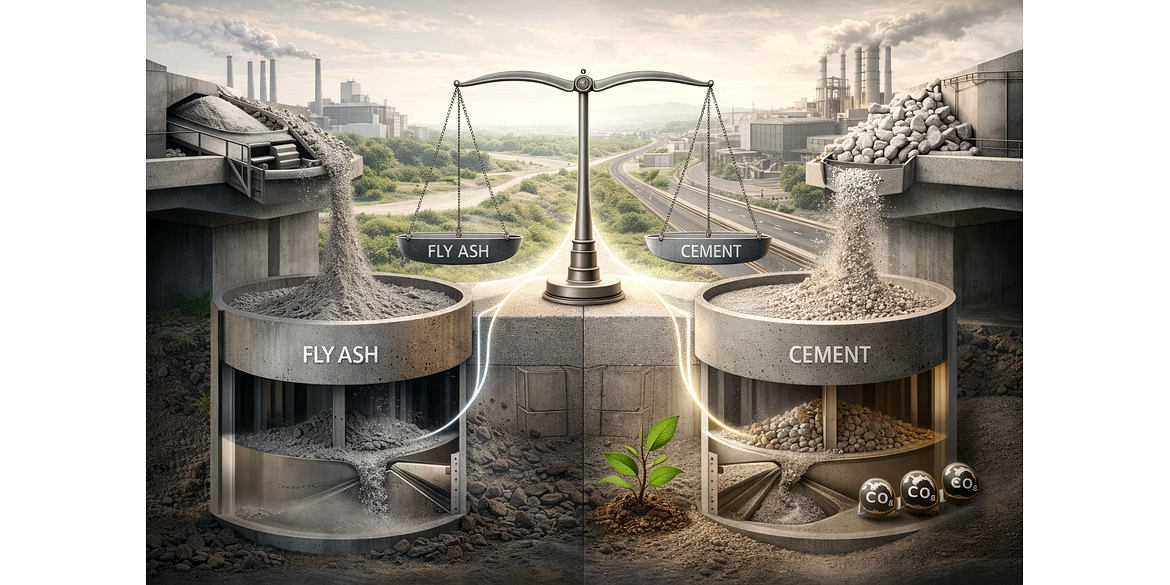

Cementitious materials are essential to modern construction, directly influencing structural strength, durability, cost efficiency, and sustainability outcomes. Traditionally, Portland cement has dominated construction markets, but growing environmental concerns and performance expectations are driving global buyers toward alternatives such as fly ash.
For infrastructure projects and bulk construction buyers, selecting the right cementitious material significantly impacts project cost, lifespan, regulatory compliance, and long-term performance.
Cementitious materials form the backbone of concrete performance, determining load-bearing capacity, durability, and resistance to environmental stress. As construction standards evolve, buyers increasingly evaluate both cost efficiency and sustainability alongside performance.
Key Considerations for Buyers- Material performance and durability
- Cost efficiency over project lifecycle
- Environmental and regulatory impact
Fly ash is a by-product of coal combustion and is widely used as a supplementary cementitious material. Unlike traditional cement, which requires energy-intensive clinker production, fly ash utilizes existing industrial output, making it a more sustainable option.
In many construction applications, fly ash partially replaces cement while maintaining or improving concrete performance when properly designed and applied.
Basic Comparison- Fly ash: industrial by-product, pozzolanic material
- Traditional cement: clinker-based, high energy consumption
- Fly ash enhances concrete properties when properly used
Cost remains a major driver for global buyers and project developers. Fly ash generally offers a lower per-ton cost than traditional cement, particularly for large-scale infrastructure and bulk construction projects.
Beyond raw material pricing, fly ash can reduce overall project costs by improving workability, reducing cement consumption, and lowering long-term maintenance requirements.
Cost Advantages of Fly Ash- Lower raw material cost in bulk sourcing
- Reduced cement usage per cubic meter
- Potential savings in long-term maintenance
Fly ash contributes to improved long-term strength and durability in concrete structures. While traditional cement provides faster early strength, fly ash enhances later-age strength and overall structural integrity.
These performance characteristics make fly ash particularly suitable for large infrastructure projects and mass concrete applications.
Performance Benefits- Improved long-term compressive strength
- Reduced permeability and cracking
- Enhanced resistance to chemical attack
Concrete mixes containing fly ash offer improved flow characteristics and reduced water demand. This enhances placement efficiency, pumpability, and finish quality, especially in large pours.
Traditional cement mixes often require higher water content or chemical additives to achieve similar workability.
Efficiency Gains- Better flow and pumpability
- Reduced water requirement
- Improved surface finish
Traditional cement production is one of the largest contributors to global CO₂ emissions. Fly ash reduces environmental impact by repurposing industrial by-products and lowering overall cement consumption.
Sustainability-focused buyers increasingly prefer fly ash-based construction materials to meet green building requirements and environmental targets.
Sustainability Comparison- Fly ash reduces carbon footprint
- Supports circular economy practices
- Helps meet green building requirements
Fly ash is widely accepted in international construction standards and infrastructure projects. Many countries actively encourage or mandate its use to improve sustainability and performance outcomes.
While traditional cement remains essential, partial replacement with fly ash has become increasingly common across global construction markets.
Market Trends- Growing adoption in global infrastructure projects
- Supported by international construction standards
- Preferred for sustainable construction initiatives
The choice between fly ash and traditional cement depends on project requirements, timelines, and sustainability objectives. Many global buyers adopt blended solutions to balance early strength with long-term performance and cost efficiency.
A strategic material selection approach helps optimize construction outcomes while managing cost and environmental impact.
Decision Factors- Project scale and timeline
- Performance and durability requirements
- Cost and sustainability objectives
Yes, fly ash is generally more cost-effective, especially for bulk and large-scale construction projects.
2. Does fly ash reduce concrete strength?No. Fly ash improves long-term strength and durability, though early strength gain may be slower.
3. Can fly ash fully replace cement?Fly ash is typically used as a partial replacement to optimize performance, cost, and sustainability.
4. Is fly ash suitable for infrastructure projects?Yes, fly ash is widely used in roads, bridges, dams, and large concrete structures.
5. How does fly ash impact sustainability?It reduces carbon emissions, repurposes industrial by-products, and supports eco-friendly construction practices.
6. Are there international standards supporting fly ash use?Yes, fly ash is recognized and approved in many international construction standards.
7. Why do global buyers prefer fly ash-based materials?They offer cost savings, improved durability, sustainability benefits, and strong global acceptance.