

Alpha Impex India is a global trading and export company specializing in sustainable construction materials and agro & food products. Rooted in India with global reach, we deliver quality-driven, ethically sourced products through reliable trade ...
- (+91) 9840047860
- info@alpha-impex.com
- 34, 36, Devadi Street, Kutchery Road, OPP More Supermarket, Mylapore, , Chennai, Tamil Nadu, India. 600004
© 2020 Alpha Impex India. All Rights Reserved
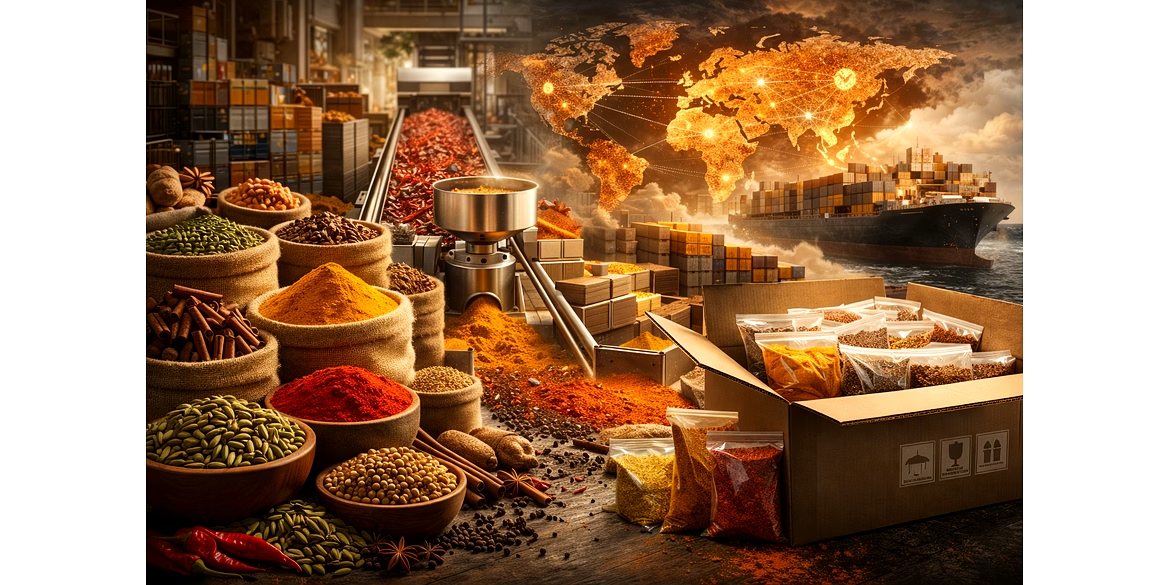

India is one of the world’s largest producers and exporters of spices, supplying international markets with a wide range of whole, ground, and processed products. The country’s long-standing agricultural expertise, combined with modern processing infrastructure, enables consistent supply for global food industries.
For importers, India offers a reliable sourcing destination with scale, diversity, and export readiness.
India is one of the world’s largest producers and exporters of spices, supplying international markets with a wide range of whole, ground, and processed products. The country’s long-standing agricultural expertise, combined with modern processing infrastructure, enables consistent supply for global food industries.
Why India Leads Global Spice Exports- Large-scale cultivation across multiple regions
- Established export-oriented supply chains
- Strong alignment with international food standards
India offers an unmatched portfolio of spices catering to diverse culinary and industrial applications. Buyers can source multiple spice categories from a single origin, simplifying procurement and logistics.
This variety supports both mass-market and premium product segments, strengthening sourcing efficiency for global spice importers and food manufacturers.
Commonly Exported Indian Spices- Chilli, turmeric, black pepper, cumin, coriander, fennel
- Whole spices, ground spices, and fine powders
- Conventional and organic varieties
Processing plays a critical role in maintaining spice quality, safety, and shelf life. Export-grade Indian spices undergo controlled cleaning, drying, grinding, and packaging to meet buyer specifications and regulatory requirements.
Modern processing ensures consistency and minimizes contamination risks for international spice trade.
Key Processing Stages- Cleaning and sorting to remove impurities
- Controlled drying to preserve aroma and color
- Grinding and blending under hygienic conditions
Global buyers expect strict adherence to food safety and quality standards. Indian spice exporters implement quality control systems across sourcing, processing, and packaging to ensure compliance with destination-market regulations.
These controls reduce rejection risks and ensure consistent product performance for bulk and recurring spice orders.
Quality Assurance Measures- Defined product specifications and grading
- Batch testing and inspection procedures
- Traceability from source to shipment
Packaging is designed to protect spices from moisture, light, and contamination during long-distance transport. Exporters offer flexible packaging solutions based on buyer needs, application, and shipment volume.
Proper packaging helps retain freshness and extend shelf life, supporting export-ready spices for global markets.
Packaging Options- Bulk packaging for industrial buyers
- Food-grade bags, pouches, and cartons
- Customized packaging based on buyer requirements
Indian spices are widely used across global industries due to their strong flavor profile and adaptability. From traditional cuisines to processed food manufacturing, they play a key role in diverse applications.
Major Applications- Food manufacturing and seasoning blends
- Horeca and catering industries
- Retail spice products and private labels
Sourcing spices from India offers importers commercial, operational, and strategic advantages. The combination of scale, quality, and pricing supports long-term sourcing partnerships.
India’s export ecosystem allows buyers to manage costs while maintaining consistent quality, making Indian spice sourcing a reliable approach for recurring contracts.
Importer Advantages- Competitive pricing with scalable supply
- Reliable availability for recurring orders
- Strong global acceptance and demand
1. Which Indian spices are most commonly exported?
Common exports include chilli, turmeric, black pepper, cumin, coriander, fennel, and blended spice powders.
2. Are Indian spices available in both whole and powdered forms?
Yes, Indian exporters supply spices in whole, ground, powdered, and custom-processed formats.
3. How do exporters ensure food safety and quality?
Through controlled processing, batch testing, traceability, and adherence to international food safety standards.
4. What packaging options are available for spice exports?
Packaging options include bulk bags, food-grade pouches, cartons, and customized packaging based on buyer needs.
5. Are Indian spices suitable for food manufacturing?
Yes, they are widely used in food manufacturing, seasoning blends, horeca applications, and retail products.
6. Can Indian exporters handle bulk and recurring orders?
Yes, India’s large-scale production and processing infrastructure supports bulk and long-term supply contracts.
7. Why are Indian spices preferred in international markets?
They are valued for strong flavor, consistent quality, wide variety, competitive pricing, and global culinary acceptance.